Waste Management
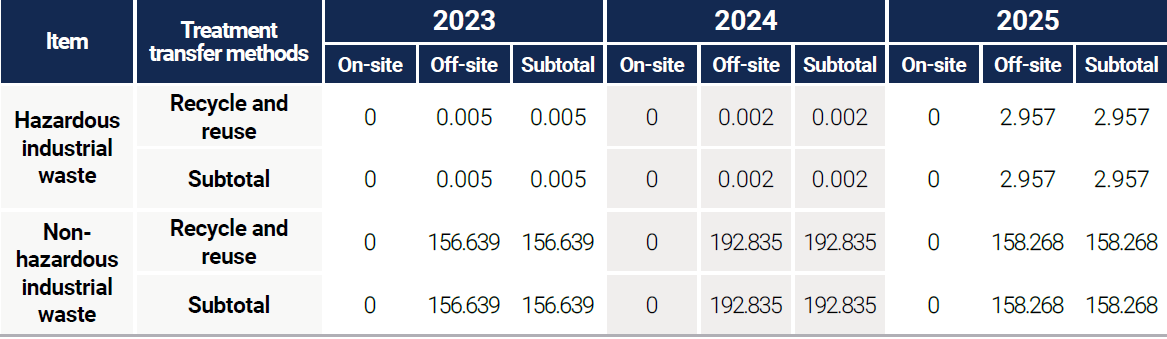
In addition to focusing on waste reduction at the source, the Group seeks to enhance the resource value of existing waste. Subject to compliance with local regulations and available technologies, the Group prioritizes recycling methods such as reuse and material recovery to ensure the most effective utilization of waste resources. In 2025, 8.8% of the Group’s hazardous industrial waste and 38.8% of non-hazardous industrial waste were treated through recycling methods, accounting for 36.5% of the total annual waste generated.
Amount of Waste Generated
The Group generates hazardous industrial waste primarily from product testing activities, mainly classified as E0217 (waste electronic components, scraps, and defective products). All hazardous industrial waste is entrusted to qualified licensed waste removal and treatment contractors for disposal. The waste is subsequently processed by professional electronic waste recycling facilities through physicochemical treatment. After shredding, part of the waste is subjected to metal recovery through refining processes, while non-recyclable portions are treated via incineration. To ensure proper handling of hazardous industrial waste by outsourced contractors, the ESH Department conducts regular inspections of their operations, including on-site audits or accompanying waste transportation processes. This ensures compliance with proper treatment procedures and minimizes environmental risks and impacts associated with hazardous industrial waste. In 2025, a total of 4 waste transportation tracking operations and 2 on-site audits were conducted, with a 100% compliance rate of contractor operations.
In 2025, the Group’s total waste generation was 441.342 metric tons, of which hazardous industrial waste accounted for 33.483 metric tons (7.6%), and non-hazardous industrial waste accounted for 407.859 metric tons (92.4%). The decrease in hazardous industrial waste in the current year despite an increase in revenue is mainly due to the fact that in 2024, a larger amount of inventory was scrapped following management approval. In the current year, the inclusion of SStek resulted in total waste generation remaining roughly comparable to the previous year. Excluding SStek, Phison Electronics alone reduced waste generation by 8.37% compared to 2024, indicating initial effectiveness of internal waste reduction initiatives.
- Total Industrial Waste Generation, Transferred Treatment, and Direct Disposal Summary (all sites combined, unit: metric tons)
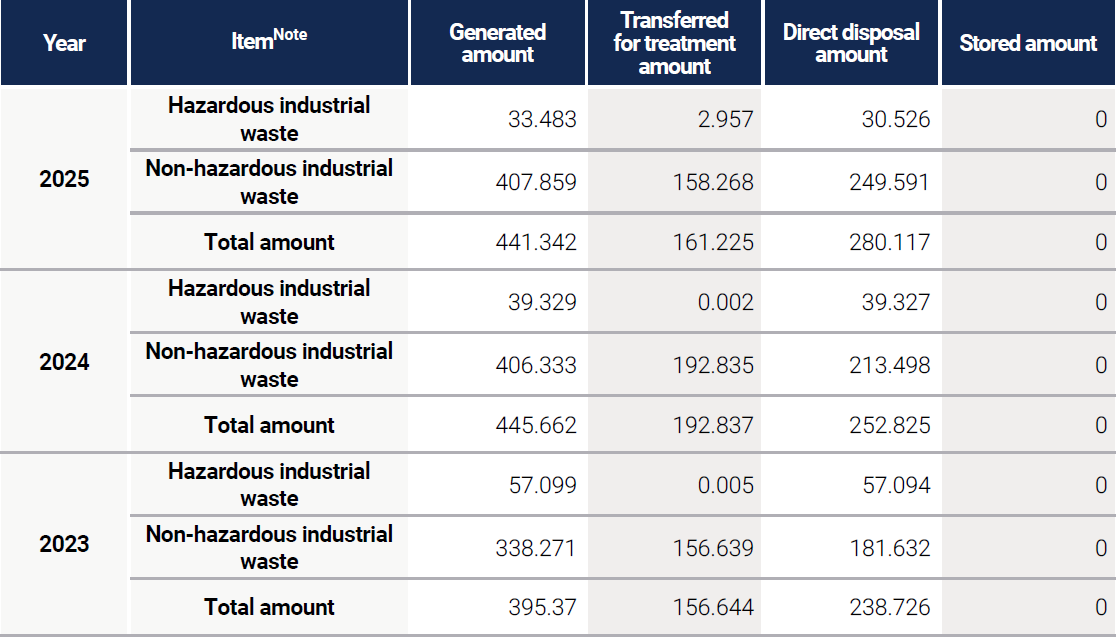
- Note 1: The classification of hazardous and non-hazardous waste is determined in accordance with local regulations at each operating site.
- Note 2: The data for 2023 and 2024 were restated due to a revision in the definition of treatment methods; total waste volume remained unchanged.
- Waste Transferred from Treatment by Recycling Operations (all sites combined, unit: metric tons)
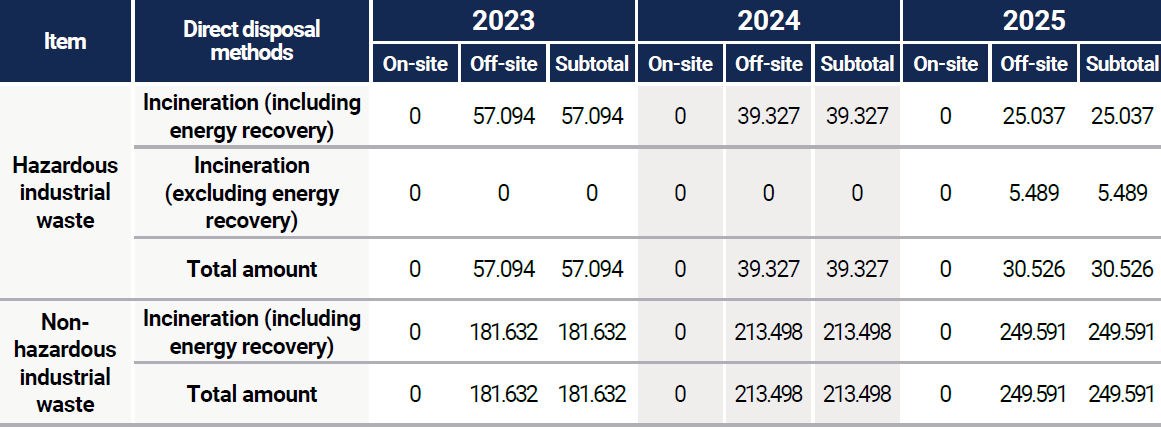
- Waste Directly Disposed by Treatment Operations (all sites combined, unit: metric tons)