
Phison Electronics (8299TT), a leading provider of NAND controllers and NAND storage solutions, today (December 24, 2025) announced its participation in the inaugural International FHIR Server Performance Competition hosted by Taiwan’s Ministry of Health and Welfare (MOHW). Leveraging its self-developed on-premises high-performance storage server solution, Phison received two major awards — the Best Real-Time Application Award and the Best Hardware Performance Award — demonstrating its strong technical capabilities in healthcare information standardization and high-performance data processing.
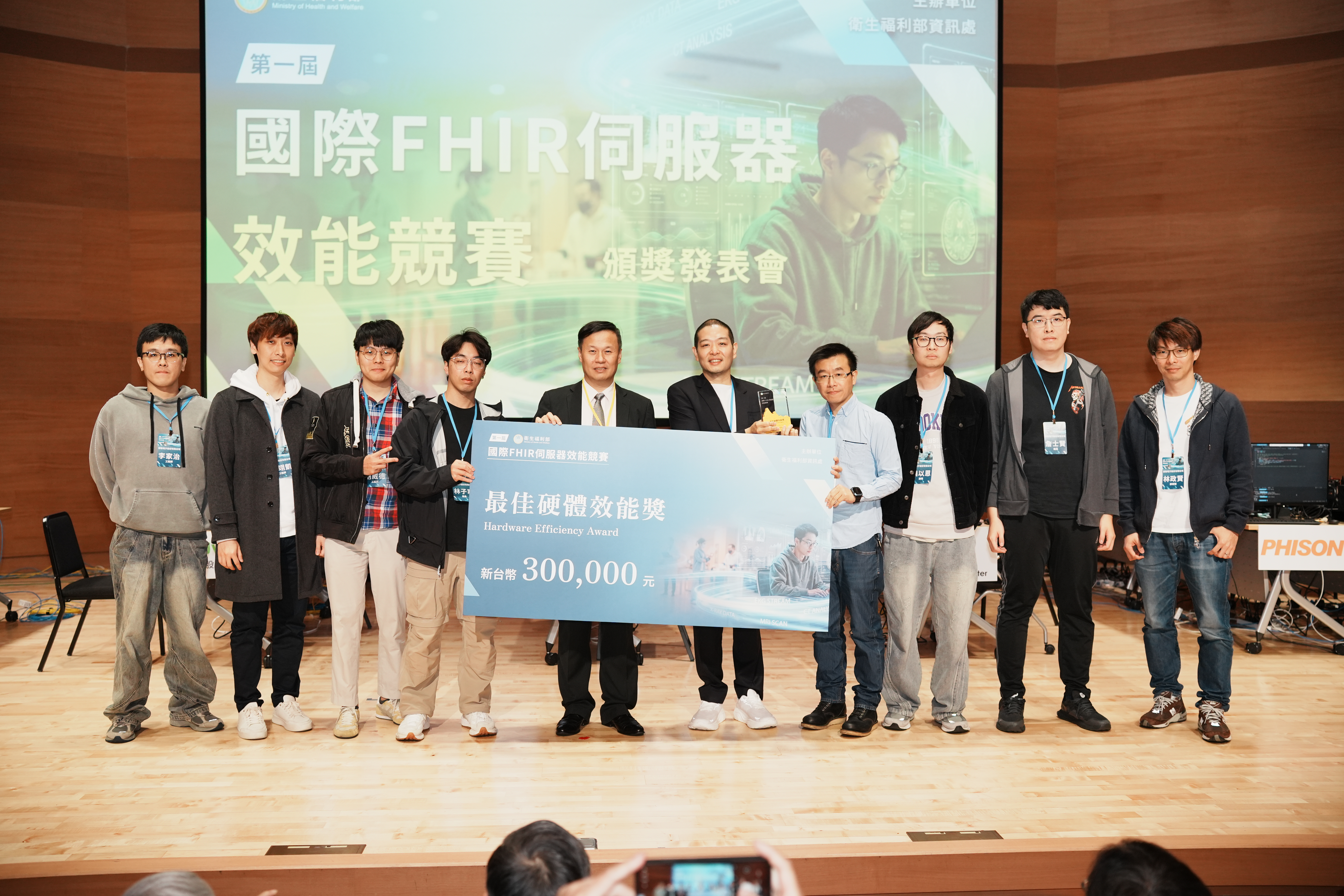
Phison Awarded the “Best Hardware Performance Award” at the MOHW’s First International FHIR Server Performance Competition
As healthcare digitalization and cross-institutional data integration continue to accelerate, FHIR (Fast Healthcare Interoperability Resources) has become a critical global standard for healthcare information exchange. In recent years, the MOHW has actively promoted a FHIR-centric healthcare information exchange platform, with the goal of broad adoption across medical institutions in Taiwan and alignment with international standards. This initiative aims to improve the efficiency of clinical data circulation and enable the development of smart healthcare and AI-driven medical applications. Held under this policy framework, the competition evaluated FHIR server solutions through real-world performance testing, focusing on real-time responsiveness, data accuracy, and system stability.
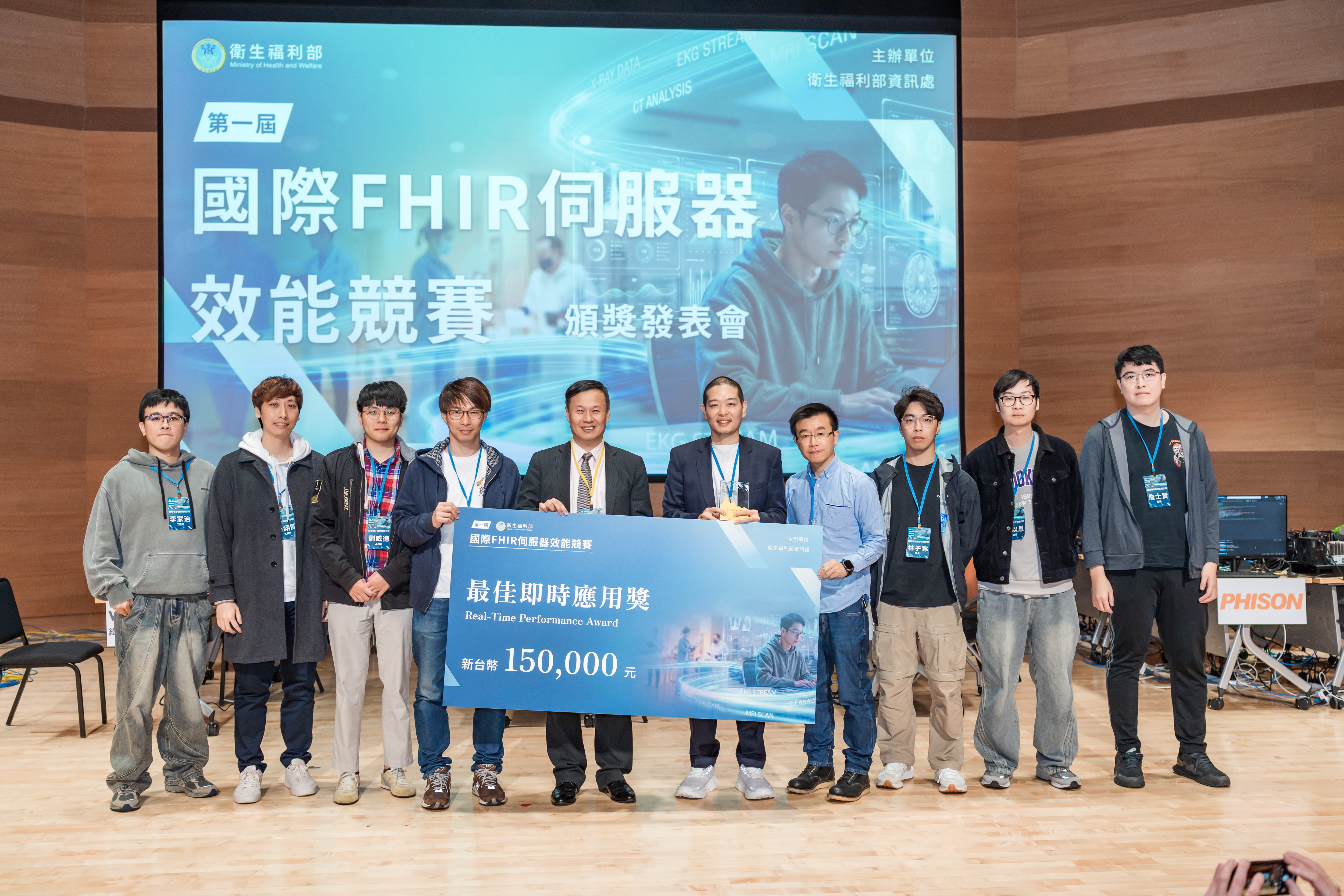
Phison Awarded the “Best Real-Time Application Award” at the MOHW’s First International FHIR Server Performance Competition
In this competition, Phison demonstrated a decisive advantage with its comprehensive on-premises FHIR server solution. All computation and data processing were performed at the edge, without uploading data to the cloud, ensuring data security and preventing data leakage. This architecture delivers both high security and confidentiality, making it particularly well suited for healthcare environments with stringent cybersecurity and privacy requirements. The results showed that Phison was the only participant to complete all competition tasks within the required timeframe, and the only solution to achieve 100% data accuracy, highlighting its technological maturity and system stability. In addition, compared with cloud-based models that require ongoing subscription fees, Phison’s on-premises solution adopts a one-time deployment cost, effectively reducing long-term operational expenses. These strengths earned unanimous recognition from the judging panel, enabling Phison to secure two major awards.
Phison’s success was driven by its high-performance FHIR server built on its long-established enterprise SSD technologies. The solution features a scalable cluster architecture integrated with Phison’s self-developed enterprise SSD X200P. Through system-level load balancing and performance optimization algorithms — combined with application-specific SSD firmware customization — the solution significantly increases the number of concurrent users supported. On the software side, Phison optimized data ingestion workflows and FHIR data transformation logic, effectively reducing processing time while lowering error rates. This approach enables an optimal balance between performance and accuracy, successfully demonstrating “high-speed processing with high precision” in the competition’s benchmark results.
K.S. Pua, CEO of Phison, stated, “FHIR is not only a critical standard for healthcare information exchange, but also a key foundation for future smart healthcare, AI medical applications, and cross-institutional data integration. We are honored to receive dual recognition at the MOHW’s first International FHIR Server Performance Competition. Our solution, integrating enterprise SSDs, cluster architecture, and system-level optimization algorithms, not only validates our strengths in enterprise SSD storage technologies, but also proves that Phison’s storage solutions deliver both high performance and high reliability in mission-critical healthcare systems. Looking ahead, Phison will continue to support government initiatives on medical data standardization and healthcare information exchange. By incorporating intelligent, AI-driven, and automated design goals, we aim to transform these competition results into deployable products and end-to-end solutions. We also look forward to collaborating with potential partners across the global healthcare value chain to help medical institutions in Taiwan and worldwide lower deployment barriers, improve operational efficiency, and build a robust digital healthcare ecosystem.”