
Conflict Minerals Control
To ensure we are not sourcing any conflict minerals which were mined through abuses of human rights or under the coercion of armed groups, the Company has established the Phison Conflict-free Minerals Management Policy and required suppliers and subcontractors to sign a letter of commitment for avoidance use of conflict minerals or non-use of conflict minerals before they become qualified supply chain partners. The process for conflict minerals inquiry: after the product requirements and specifications are submitted, if any of the product materials involve metal, a conflict minerals inquiry is conducted to identify the type of the metal, the name of smelter and its country of origin, whether the mineral comes from recycled or scrap sources, and the country where the mineral was mined from, through conflict minerals inquiry forms (Conflict Minerals Reporting Template CMRT, Cobalt Reporting Template-CRT, Extended Minerals Reporting Template-EMRT). If the supplier is found to be in breach of the Phison Conflict-free Minerals Management Policy, we will cease all purchases from such supplier immediately. The supplier will be required to provide its plans for corrective and preventive measures.
Conflict Minerals Control Process
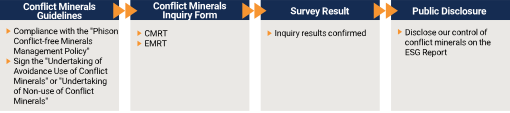
Reasonable Country of Origin Inquiry (RCOI)
Phison conducts reasonable country of origin inquiry to identify the original place of 3TG: gold (Au), tantalum (Ta), tin (Sn), tungsten (W), cobalt (Co), and Mica in our electronic products, and to confirm whether they originate from conflict zones.
Our RCOI (Reasonable Country of Origin Inquiry) includes the following steps:
- Conduct inquiries into suppliers to identify the smelters and their sources of 3TG, cobalt, and mica through Conflict Minerals Reporting Template (CMRT) and Extended Minerals Reporting Template (EMRT).
- Suppliers are asked to sign an undertaking letter confirming their compliance with the Phison Conflict-free Minerals Management Policy.
Each year, the Group identifies mineral and smelter source information within the supply chain through conflict minerals investigation forms. In 2025, the Group investigated a total of 134 suppliers and completed verification of 283 material part numbers under the conflict minerals material management process. Based on the investigation results, the sources of gold (Au), tantalum (Ta), tin (Sn), tungsten (W), cobalt (Co), mica, copper (Cu), natural graphite, lithium (Li), and nickel (Ni) were all confirmed to originate from smelters recognized by the Responsible Minerals Initiative (RMI), in compliance with responsible minerals requirements.
Revenue from products containing minerals from conflict-affected and high-risk areas
Year | 2022 | 2023 | 2024 | 2025 |
Percentage of total revenues from products containing minerals from conflict-affected and high-risk areas | 0 | 0 | 0 | 0 |
Percentage of total revenues from products containing minerals from conflict-affected and high-risk areas coming from suppliers that have been verified conflict-free | 0 | 0 | 0 | 0 |
